What Equipment Do You Need to Build a Successful Cosmetology School
January 22, 2026
How to Incorporate High-End Materials into Your Salon Design
February 4, 2026
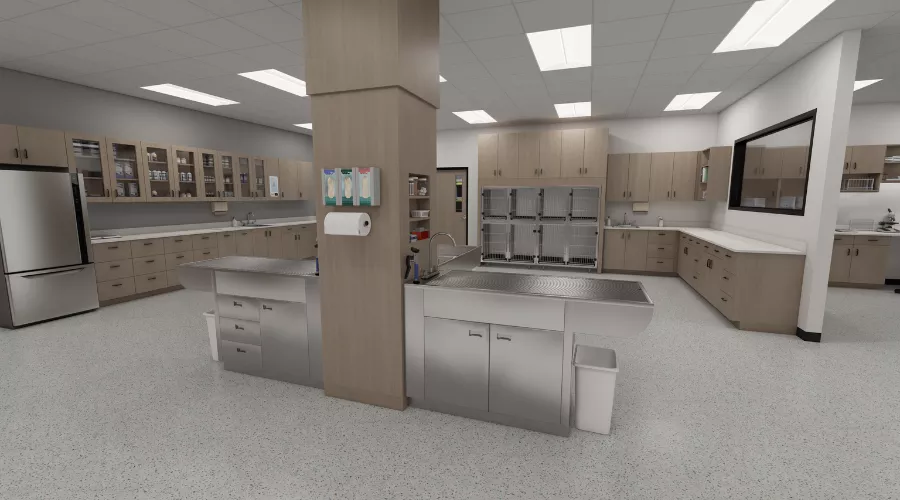
If you’ve ever tried to draw blood from a nervous German Shepherd while balancing supplies on a wobbly cart, you know precisely why treatment room design matters. Imagine servicing a senior Labrador during an emergency—half the team searching for gauze because the storage was a mess, all while trying to keep the dog calm and safe. Situations like these really make you second-guess the workflow efficiencies of your clinic or veterinary hospital. For our clients who identified these additional stress points within their animal health clinic, we’ve worked with them to transform their existing space into the best version it allows. Consider these five features that will transform your treatment room from hectic to efficient.
1. Ergonomic and Durable Veterinary Millwork
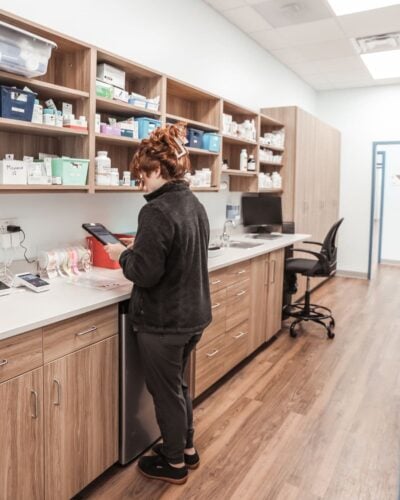
Let’s be honest—your cabinetry and workstations are the backbone of your treatment room. I’ve lost count of how many clinics I’ve seen try to get by with standard kitchen cabinets, crossing their fingers that particle board will somehow survive years of splashing, claw marks, and daily chaos. Your team spends hours standing at these stations. If the counters are too low or the cabinets require awkward bending to reach essential supplies, you are inviting fatigue and injury.
What to Look For:
High-quality veterinary millwork is specifically engineered for this environment. We highly encourage you to research and ensure your cabinets are built with materials that resist water and withstand constant exposure to sanitary chemicals.
- Seamless designs-Look for cabinetry that integrates seamlessly with your equipment.
- Durability-Materials should be resistant to impact (think excited paws and dropped tools).
- Ergonomics-Counter heights should be comfortable for standing work, and drawers should be full-extension so you aren’t digging blindly into the back of a cabinet during a critical moment.
2. Advanced Veterinary Treatment Room Equipment Integration
Over the years at Kaemark, we've heard a common refrain from our clients: having essential equipment close at hand is a game-changer, but making that a reality isn’t always as straightforward as it seems. Our approach draws directly from this feedback. We’ve seen the output transformation of our client's team when they worked with Kaemark for a thoughtful design and layout.
The Solution–
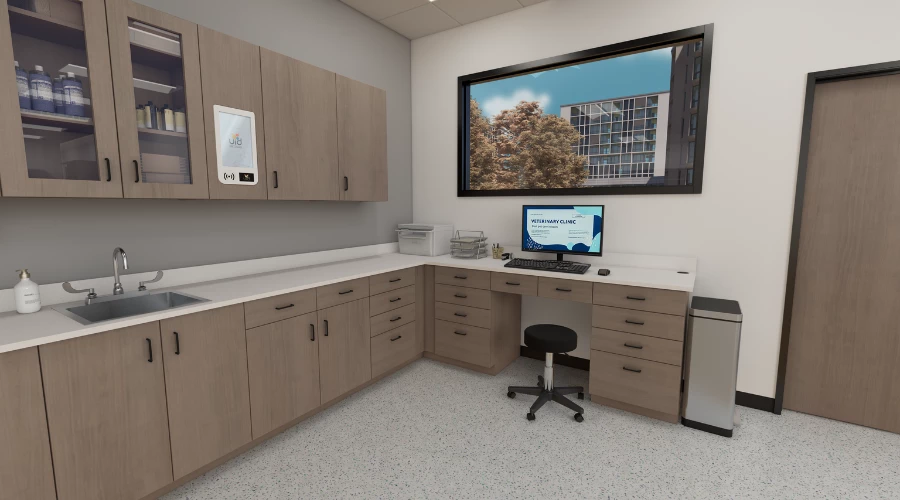
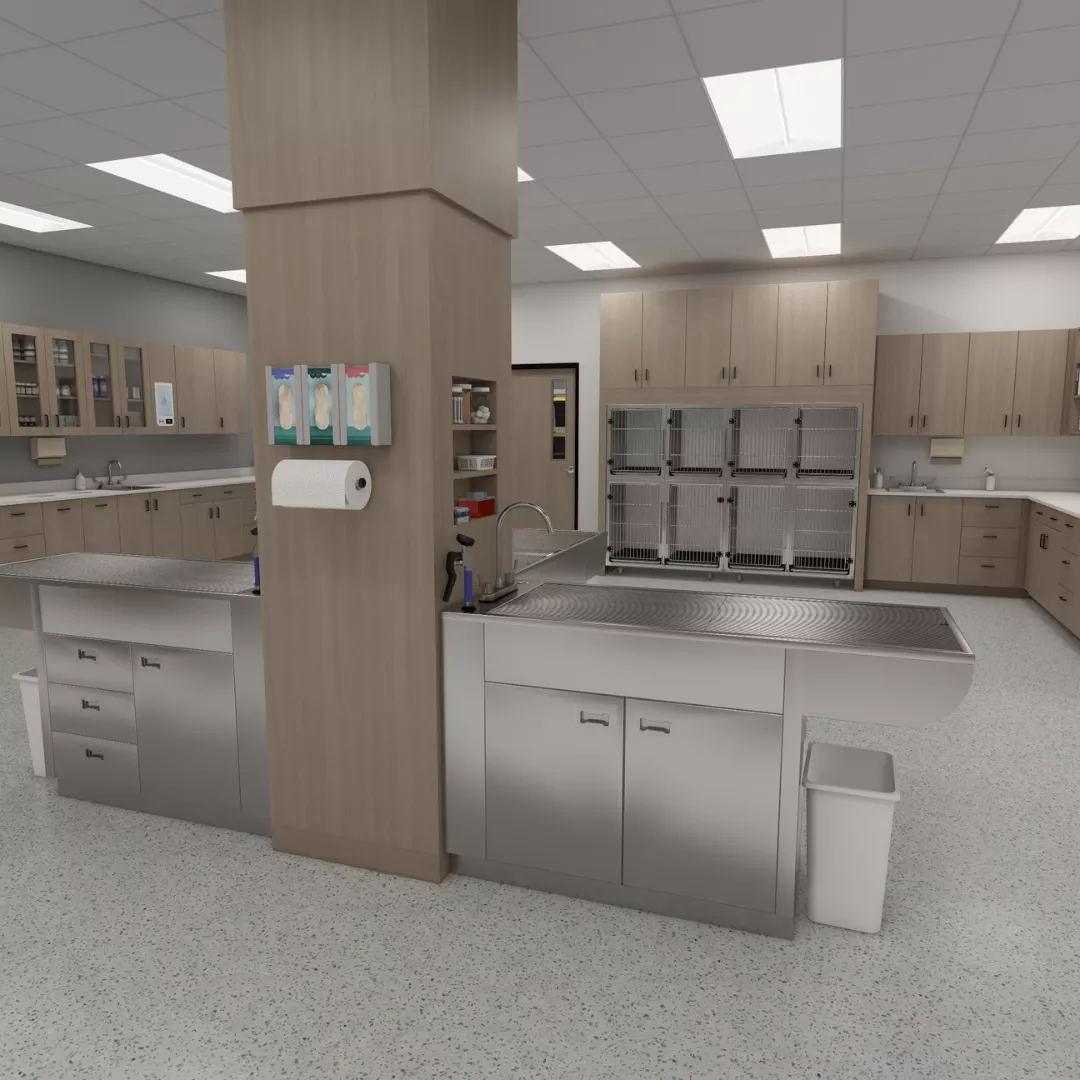
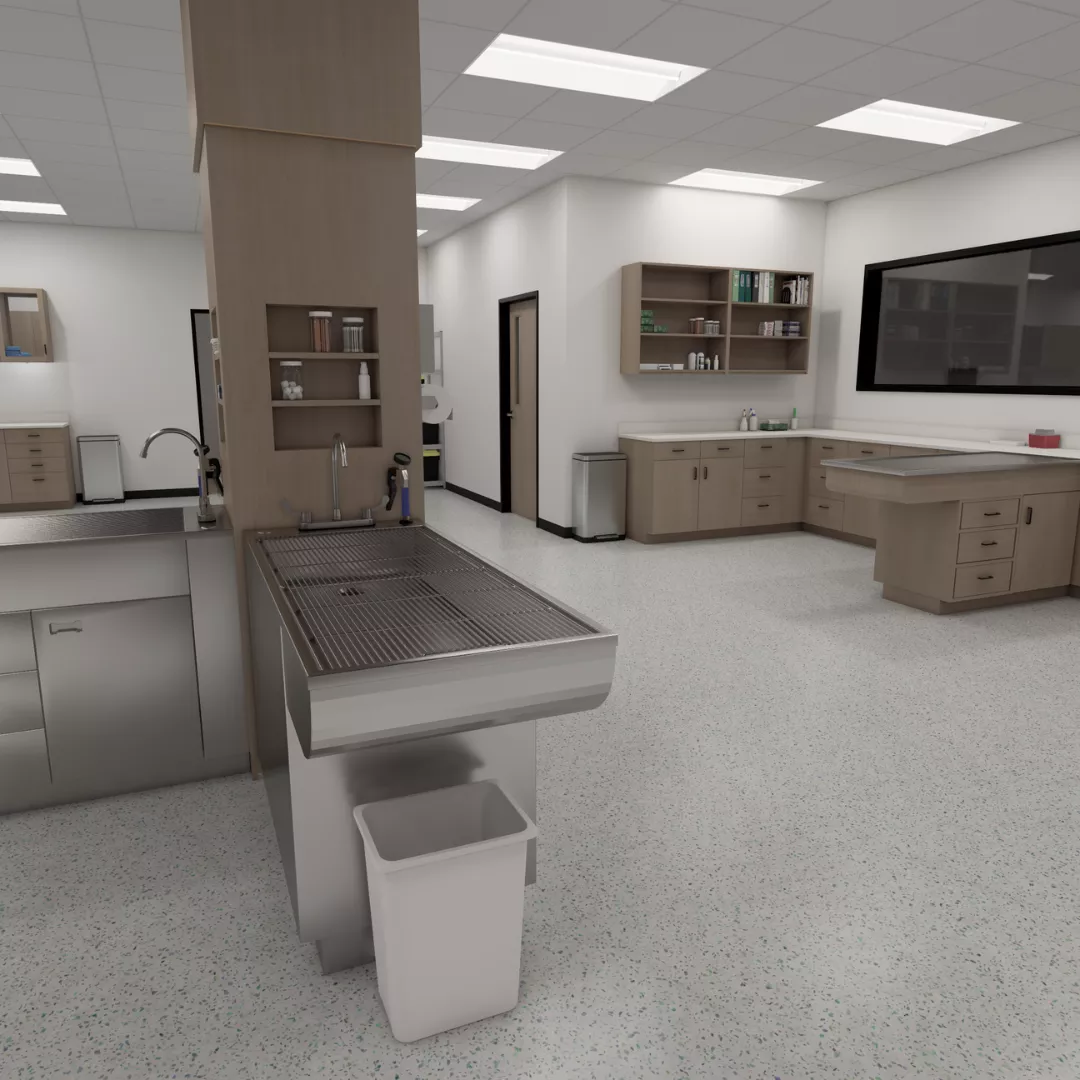
Modern veterinary treatment room equipment shouldn't be an obstacle course. The best treatment rooms feature integrated designs where equipment has a dedicated "home."
- Treatment Chase - the chase with up to four unique work areas saves space while providing essential storage and dedicated space for equipment, so no matter what you're working on, there’s a specialized area for your exact needs.
- Over Cage Storage - There’s so much space above your cage bank, and cabinetry for linens, towels, and heated blankets is perfect for storing there.
- Pass-through drawers - Our favorite essential storage solution: the highly sought-after pass-through drawer. You will have access to the essentials stored in these drawers. No matter which side of your wet or dry table you and your staff are working from.
3. Efficient Storage Solutions
How often do you experience the frustration of not being able to locate urgent supplies during a busy treatment or an emergency? We hear daily about the desperate need for our animal health clinic clients to work with ease, and not in a jumbled space. Disorganized storage isn’t just inconvenient; it can genuinely impact patient care when efficient access is needed most.
The "Zone" Approach–
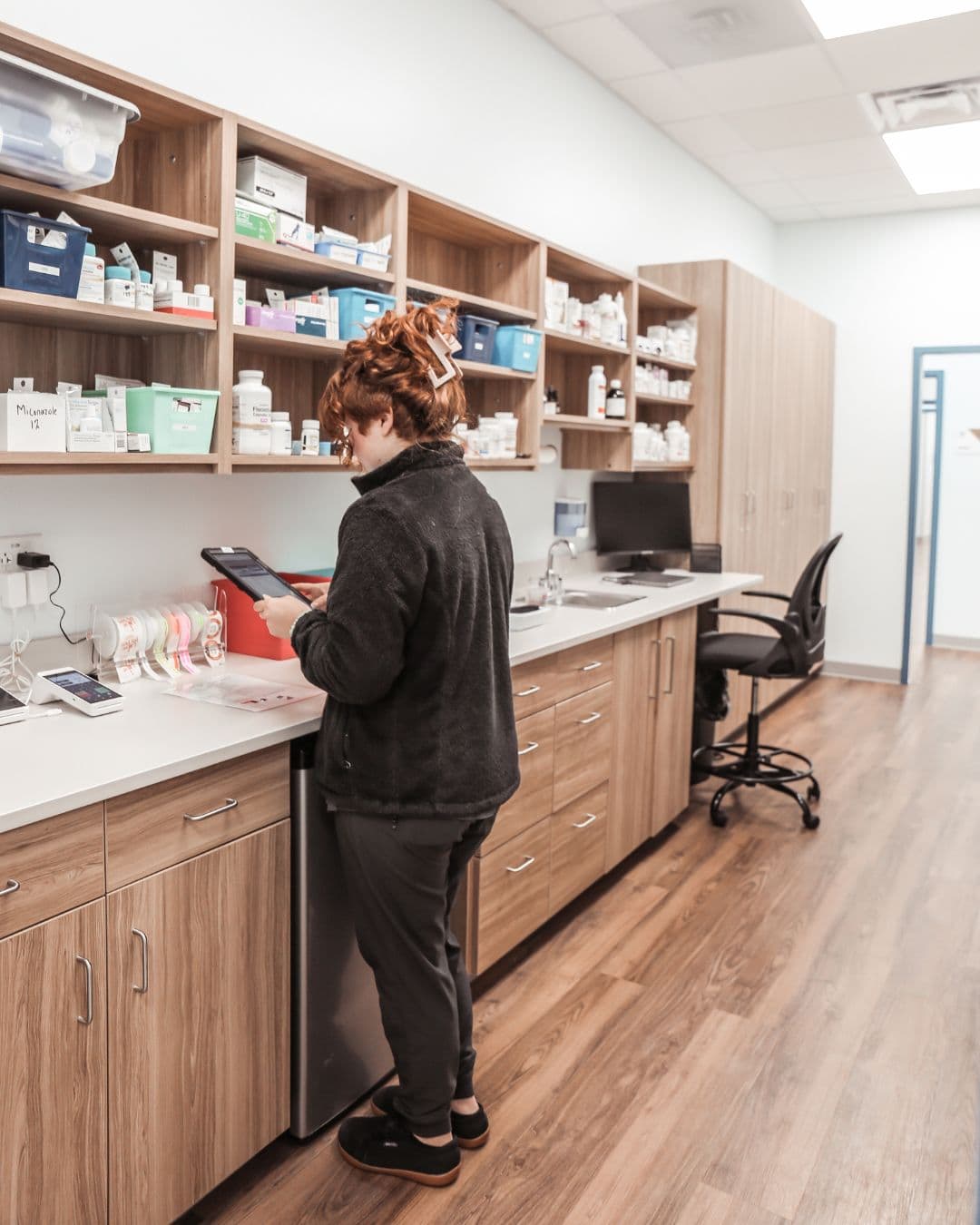
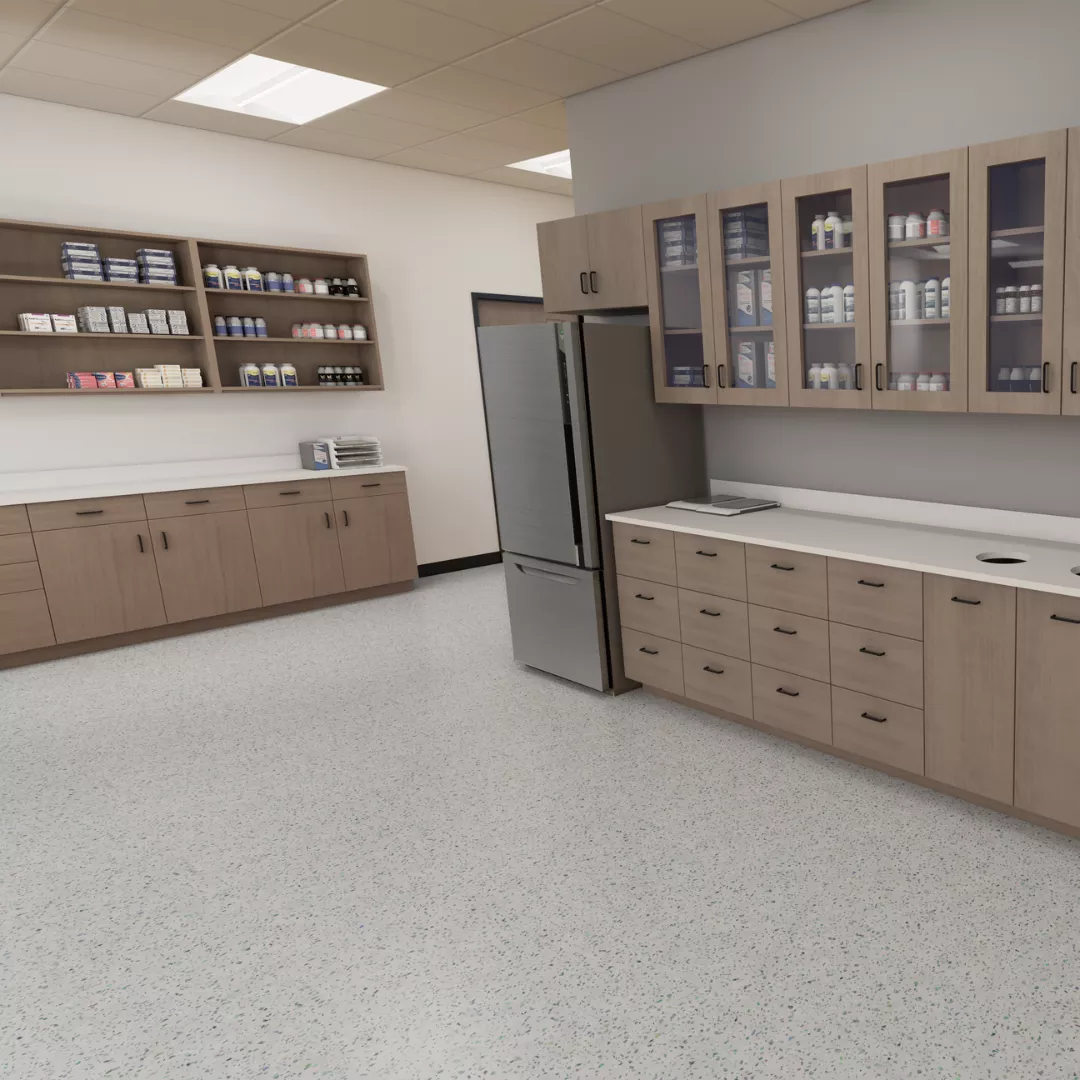
- Storage Near the Work Area-Keep syringes and needles along with basic prep supplies within arm's reach of the treatment tables. You shouldn't have to walk across the room for a gauze square.
- Pass-through cabinets–If your treatment room shares a wall with the pharmacy or surgery prep area, they are a game-changer. They allow you to restock from the hallway without disrupting the flow of the treatment area.
- Visual inventory–Glass-front cabinets or open shelving systems help you spot low stock levels instantly and you do not run out completely.
4. Surfaces Designed for Cleanliness
As a manufacturing specialist in veterinary design, we have consistently heard from clinics that keeping treatment rooms impeccably clean is challenging. Many of our clients have shared how infection control is always top of mind, yet daily cleaning routines can sap team energy when surfaces are not designed for efficiency. The right surfaces can turn sanitizing from an exhausting chore into a simple process.
Surface Selection–
- Countertops That Do Not Absorb Liquids–Solid surface materials or stainless steel are essential. They do not harbor bacteria and can handle harsh disinfectants without degrading.
- Coved flooring–This is where the floor material curves up the wall a few inches. It eliminates the sharp corner where dirt and fur love to hide.
- Seamless cabinetry–As mentioned with veterinary millwork, avoiding seams prevents moisture from seeping into the wood substrate, which creates a breeding ground for mold and bacteria.
5. Flexible and Multi-Purpose Spaces
At Kaemark, we've learned from countless client conversations that flexibility is one of the most significant pain points in treatment room design. Many clinics have shared how unpredictable their daily caseload can be. One moment managing a routine dental cleaning, and the next responding to a heatstroke emergency. Client feedback has shown us how features like movable workstations have made a real difference. That adaptability is crucial for modern animal hospitals aiming to provide seamless care–no matter how busy or varied the workday becomes.
Adaptable Layouts–
Rigid, fixed furniture can limit your clinic's growth. A modern treatment room often utilizes-
- Mobile workstations: Carts or small tables that can be locked into place when needed but moved aside for a large stretcher or a giant breed dog on the floor.
- Dual-purpose wet tables: These can function as a standard exam surface or a dental/procedure table by removing the grate cover.
- Open floor plans: While you need islands for treatment tables, leaving ample perimeter space allows for traffic flow. It prevents the "bottleneck" effect when multiple doctors and techs are working simultaneously.
Conclusion
As manufacturing experts in veterinary and animal health clinic design, we’ve had the privilege of working alongside teams who tell us that upgrading their treatment rooms has paid off in ways that go well beyond aesthetics. We’ve even heard stories of clinics saving up to 12 minutes per room per day on cleaning after switching to seamless countertops. While these gains may seem small at first glance, they are often described to us as key advantages. Hours reclaimed and staff who head home at the end of the day feeling accomplished rather than drained.
Ready to elevate your veterinary practice? Contact Kaemark today to discuss our custom veterinary solutions and download our design guide.